New solar panels in Great Britain at 15-year high as fossil fuel costs soar
Boom in solar farms and home installations in first half of 2026 began shortly after start of US-Israel war against Iran Great Britain has recorded more new solar power installations in the first half of this year than…
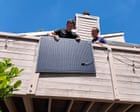
Great Britain has recorded more new solar power installations in the first half of this year than in any six-month period since 2011, as households turn to rooftop panels to help cut their energy bills.
An analysis of the government’s official figures shows that Great Britain added 142,536 solar installations in the first six months of the year, putting it on track to top last year’s record solar additions.
The government data, which includes large ground-mounted solar farms and rooftop panels, showed that the half-year solar boom is second only to the record 167,316 installations recorded in the second half of 2011, when the first large-scale solar farm was built in Cornwall on the site of a disused tin mine.
Most of the new solar installations recorded in the government’s official figures are on household rooftops, although these smaller solar systems make up slightly less than a third of the country’s total solar power capacity.
More households have fitted solar panels to their rooftops in recent years, hoping to cut their energy bills by generating their own low-cost electricity as fossil fuels have caused bills to rocket, according to energy companies.
The government’s data shows that more households are taking up grants to replace their gas boilers with low-carbon heating alternatives. The total number of applications for the boiler upgrade scheme reached 4,512 last month, up by 21% compared with June last year.
Heat pumps are expected to be in higher demand in the months ahead after the government raised its grant funding by 20% last week, from £7,500 to £9,000, to help cover the costs of replacing fossil fuel heating. Andy Burnham has also cut VAT on electricity bills from October, which makes running a heat pump cheaper.
E.ON Next, which is expected to become the UK’s biggest energy retailer, said it has recorded a 151% rise in the number of homes installing solar panels in the first half of 2026 compared with the same period last year.
“More and more households are realising just how much they can save by generating and storing their own energy,” said Phil Gilbert, a director at E.ON Next. Some of its customers have saved up to £600 a year on their annual energy bill when signed on to its solar and battery tariff, he said.
“People want to engage with their energy use, take control of their bills and rely less on the grid – and solar gives them a practical way to do that,” Gilbert added.
Octopus Energy, which is currently Great Britain’s biggest energy supplier, also noted a sharp increase in solar panel sales within weeks of the Middle East conflict causing oil and gas prices to soar. The supplier said sales increased by more than 54% in March compared with the month before. In total there are more than 2m solar installations across Great Britain.
The 1.4 megawatt (MW) Wheal Jane solar farm is now easily dwarfed by newer projects, including the 373MW Cleve Hill project in Kent, which became Britain’s largest working solar development when it reached full power last summer, and the 800MW Springwell solar farm in Lincolnshire, which is expected to begin generating in 2029.
By the end of August UK bill payers living in flats or rented properties will be able to join the millions of people across Europe using “balcony solar panels” to lower their bills, according to legislation passed this month.
Originally published by
Guardian Business
Aggregated from a public feed. Read the original at the source for the publisher's full presentation.
View original on theguardian.comContinue reading
More in Finance

South Korea’s chip giants just logged their biggest rally ever. What it means for the global AI trade.
The Kospi saw its best-ever day on Friday, as the index came roaring back thanks to historical jumps in its big tech names.

My friend and her husband own real estate. How can her children from a previous marriage get their fair share?
“Her husband is open to a trust, but he wants to be the administrator.”

If Social Security’s funding crisis is the elephant in the room, this is the mouse everyone has overlooked. You have been warned.
“Delaying Social Security until 70 results in an increased monthly payment — and that comes with proportionally higher cost-of-living adjustments.”

Diane Keaton’s stunning $23 million dream home in L.A. finally finds a buyer
The Los Angeles home that Diane Keaton spent years carefully transforming has come under offer—nine months after the beloved “Annie Hall” star died.